As an Amazon Associate I earn from qualifying purchases
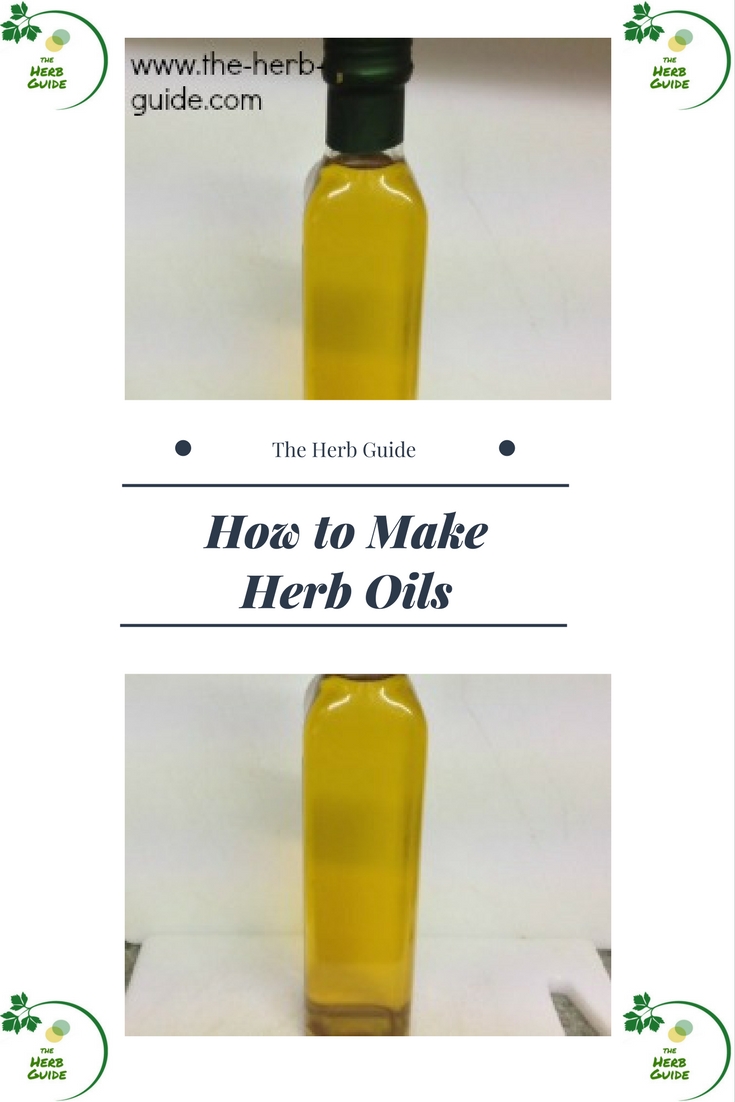
Take about 1/2 cup, 1/4 pint (125 ml) good quality olive oil and add some good quality dried herbs - approximate
quantities are listed under each herb below - combine in a bottle or jar with a tight fitting screw top lid.
Leave on a sunny windowsill or in a sunny spot outdoors if you can find somewhere that it won't get knocked over.

You can try a sample lesson to help you decide if the Herbal Academy of New England is the right choice for you - follow the link below.
Shake the bottle every day for about two weeks.
Once that time has passed, your oil should be smelling quite strongly of the herb.
Strain it to remove the old herb and add some fresh. If it doesn't smell strong enough, then continue the process for a further week.
By this time, your herb oils should be ready to use.
Using Herb Oil
I use herb oil in salad dressings, for softening onions etc in the
preparation stages of cooking a complete recipe and to make herby
croutons.
Herb Croutons
Heat some flavored oil in your frying pan and quickly fry small cubes of bread until they are crisp and golden.
Alternatively, put some oil in a bowl and stir in your cubes of bread - stir well so that they are thoroughly coated.
Then spread on a baking sheet and bake in the centre of a hot oven for about 5 minutes - it's a risky method as I normally burn them this way - I prefer the frying pan method :-)
Also, you can brush the crusts of bread prior to baking to give a delicate herby flavour.
Below is a list of common herbs used to make oils and their main uses. It is by no means an exhaustive list - tastes differ and you must do what you think you'd like best.
Basil Oil
About 2 tspn dried
Basil is excellent with tomatoes, so you can use it in any salad dressing.
Use in the softening stage of all tomato pasta sauces.
Basil flavoured croutons to accompany tomato based soups.
Brush onto shellfish, sole or mackerel prior to grilling.
Drizzle over grilled or baked tomatoes.
Heat basil oil to make an omelette extra tasty.
Bay Leaf Oil
3 bay leaves - dried.
Use to brush any meat prior to grilling or roasting.
Bay is a universal herb in tenderising meat, so it's suitable for any.
Also stronger flavoured fish would benefit from brushing prior to grilling or barbecueing.
Chive Oil
2 tspn dried
A lovely delicate onion flavour.
Heat some oil in a pan to make an omelette.
Make chive herb croutons to accompany asparagus, potato, cauliflower or cheesey based soups.
Use to soften onions or garlic in the preparation stages of any recipe that uses onions or garlic :-)
Brush on plain grilled meats or fish of any type.
Dill Oil
1 1/2 tspn dried
Dill has a 'sharp' flavour and will make bland food much more interesting.
Excellent with advocado - so make a salad dressing with it.
Dill croutons with fish soups and any chicken, tomato, asparagus or 'pulse' (beans, peas etc) based soups.
Drizzle on warm asparagus.
Brush on plain grilled halibut, trout, mackerel, snails - most fish will benefit from dill oil.
Use it to rub the chicken skin prior to roasting.
To make using direct heat, put the oil and herb into a pan and heat it - just enough so you can still put your finger in. Turn off the heat and allow to cool. Re-heat and repeat. Do this three times until you can see the oil take on the color of the herb and you should also be able to smell it.
Strain and use straight away.
It's safest to use dried herbs when making herb oils. If you use fresh, you can run the risk of botulism organisms entering the oil. The oil is a preservative but it is not anti-bacterial. You are not heating the herbs to a degree that will kill any bacteria, you are not using strong vinegar or alcohol which would also kill bacteria. To be on the safe side, I would recommend dried herbs.
Botulism affects the nervous system, could paralyse and maybe kill you... you will be very ill if you get botulism.
It is alright to use fresh herbs for remedies which you are not going to use internally, but even then you might need to wilt them. Some herbs have a very high water content and it will affect the finished product.
Where would you like to go next?
I may receive a commission if you purchase something mentioned in this post. See more details here This will not affect the amount you pay.